
What makes an international summit different from a local banking event
International banking summits and local events serve distinct purposes for financial professionals, shaped by their scale, reach and participant mix. An international summit convenes senior leaders from multiple countries or continents, often attracting 1,000 or more attendees across three or more days. A local or regional banking event typically draws 300 to 500 professionals from a defined geography — a city, region or country.

The critical difference lies not just in size but in strategic impact. International summits are designed to set industry direction, align cross-border strategies and facilitate deal flow across markets. Local events foster deep community connections and address regional regulatory nuances. Choosing between them depends on your career stage, strategic priorities and geographic footprint.
Geographic reach and participant diversity
International summits draw attendees from across Europe, the Middle East, Africa and beyond. The Banking Transformation Summit Europe, for example, brings together 1,000 senior leaders representing 200+ banks from across Europe. The Global Banking Summit (London, December 2026) expects 1,000+ attendees with 120+ speakers and 75 sessions across 7 stages, creating genuine cross-border peer networks.
Local banking events concentrate on regional strengths. A Handelsblatt Banking Summit brings around 500 leading figures from banking, fintech, politics and regulatory authorities within a defined region. This creates deeper relationships within that ecosystem but limited exposure to peers in other markets.
For professionals seeking to understand trends across multiple jurisdictions — regulatory divergence, payment system interoperability, competitive moves in other markets — international summits offer direct access to decision-makers from those markets. Attendees can benchmark strategies, learn how peers are navigating different regulatory environments and build relationships that span borders.
Speaker calibre and breadth of expertise
International summits attract C-suite executives from the world's largest banks. The Global Banking Summit 2026 features speakers including Rob Kaplan (Vice Chairman, Goldman Sachs), C.S. Venkatakrishnan (CEO, Barclays), Charlie Nunn (CEO, Lloyds Banking Group) and Dame Debbie Crosbie (CEO, Nationwide). Audience members hear directly from the leaders making major strategic decisions.
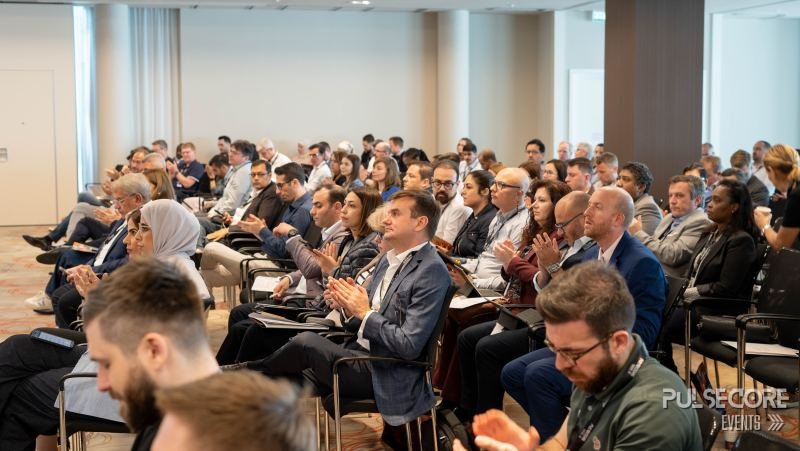
International events also bring regulators and policymakers to the stage. The Santander International Banking Conference features speakers from the European Central Bank, Bank of Spain, European Investment Bank, and international economic forums. This access to policy thinking and regulatory direction is rare at local events.
Local banking events often feature strong regional expertise — heads of digital banking, senior technologists and respected consultants within that market — but fewer global executives or policy voices. The trade-off is that local speakers may understand your specific regulatory context and customer base more intimately.
Networking scope and cross-border partnerships
International summits are structured to facilitate high-value peer meetings. The Banking Transformation Summit Europe uses a strict bank-to-vendor ratio designed to prioritise strategic conversation. Attendees schedule 1:1 meetings before the event using the networking app, ensuring time with the right peers. The event app and pre-event mixer create multiple touchpoints for connection.
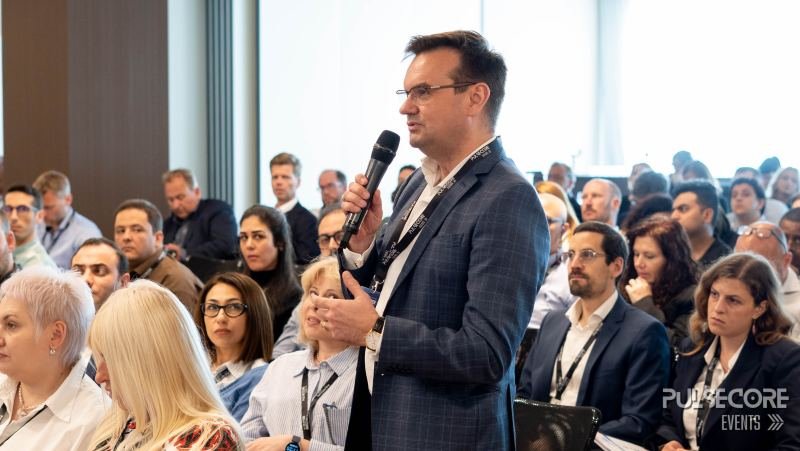
The Asian Banker Summit 2027 brings together decision-makers across financial institutions, regulators, technology firms and investors with structured networking across both days, including hosted luncheons and curated access. This creates opportunities for genuine partnership formation — correspondent banking relationships, technology pilots, regulatory alignment conversations.
Local events excel at deepening existing regional relationships. A regional bank conference may have 300–400 attendees, making it easier to have follow-up conversations with people in your local market over time. However, the scope for discovering new cross-border partnerships is narrower.
Agenda depth and multi-track programming
International summits typically span 2–3 days with 50+ sessions distributed across 5–7 parallel tracks or theatres. The Banking Transformation Summit Europe offers 100+ sessions across 7 theatres covering AI, technology, customer strategy, payments, risk, operations and leadership. This breadth allows attendees to construct a learning path tailored to their role and priorities.
The 4th Annual Digital Banking Summit (Munich) spans two days with comprehensive coverage of digital banking evolution, open finance, API monetisation, legacy system challenges and fintech competition. Multiple parallel tracks mean different professional audiences — product managers, security leaders, data officers — all find relevant content.
Local events typically run 1–2 days with 10–20 sessions. This narrower agenda is easier to follow sequentially but offers less flexibility to customise your learning experience. However, all attendees hear the same strategic message, creating stronger alignment within a regional ecosystem.
Regulatory and policy representation
International summits consistently feature central bank governors, supervisory board members, and senior policymakers. The Tbilisi Finance Summit brings together central bank governors from around the world, and discussion topics include financial policy priorities, monetary decisions and regional financial cooperation. The Santander International Banking Conference includes speakers from the European Central Bank, Bank for International Settlements, and financial regulators across multiple countries.
This regulatory access is invaluable for understanding policy momentum, compliance roadmaps and cross-border harmonisation efforts. Banking leaders hear directly what regulators expect and can align strategy accordingly.
Local events may include a single regional regulator or supervisor, but rarely attract multiple national central banks or senior ECB figures. For professionals focused on local market compliance, this is often sufficient; for those managing cross-border portfolios, international summits offer critical insight.
Cost and value trade-offs
International summit tickets typically range from €2,490 to €19,990 depending on pass type and sponsorship tier. Excellence in Digital Banking (Amsterdam, November 2026) offers Ultimate Pass at €2,990, Virtual Pass at €2,490, and sponsorship packages up to €19,990. Higher cost reflects the investment in top-tier speakers, multi-track programming, curated networking and premium venues.
For a banking executive, the ROI calculation often favours international summits: one meaningful partnership, one regulatory insight that shapes strategy, or one deal scoped during networking often pays for the ticket. The scale and calibre of attendees increases the probability of a high-value conversation.
Local events typically cost £400–£700 (or €500–€900). Lower cost is appealing if you are building community, seeking local referrals, or developing expertise in a specific market. However, the networking ROI may be lower if most attendees are regional competitors or local vendors rather than peers in other markets.
Group discounts are common at both. Excellence in Digital Banking offers a Group Discount (3 tickets) at €5,980. Banking teams attending together reduce per-person cost and can compare notes on key sessions, amplifying insight.
How to choose between local events and international summits
Choose an international summit if:
- Your strategy involves cross-border partnerships, expansion into new markets or regulatory alignment across regions.
- You lead a function (digital, risk, AI, payments) where peers in other markets face similar challenges and solutions are portable.
- You want to benchmark your organisation's strategy and capabilities against global best practice and leaders.
- You seek access to global thought leadership, regulators and policymakers.
- You are recruiting talent or exploring technology partnerships outside your home region.
Choose a local event if:
- Your role is deeply embedded in local market execution, compliance or customer relationships.
- You want to strengthen relationships within your regional banking community.
- Your budget is limited or your organisation prefers multiple smaller events over one international summit.
- You need rapid feedback on local regulatory changes or competitive moves.
- You are early in your career and building professional networks in your home market.
Many professionals attend both. A pattern of local events throughout the year keeps you embedded in your market, while one or two international summits annually expose you to global strategy and cross-border peers. Excellence in Digital Banking 7.0 offers an example: a three-day international summit (25–27 November 2026, Amsterdam) combining in-person and online options, allowing you to tailor participation to your needs and budget.
Frequently asked questions
Is an international banking summit worth the travel cost?
Yes, if you are seeking cross-border partnerships, regulatory insight or exposure to global strategy. The cost of travel and accommodation is offset by the scale of attendees (often 1,000+), the calibre of speakers (CEOs, central bankers, policymakers), and the likelihood of one meaningful business conversation. A single partnership, pilot agreement or strategic insight often pays for the trip. Local events do not require travel but offer a narrower pool of peers and decision-makers.
Can I attend an international summit online instead of in-person?
Many international summits now offer digital passes. Excellence in Digital Banking offers both Ultimate Pass (in-person, €2,990) and Virtual Pass (online, €2,490), granting access to sessions and some networking features. You gain content and speaker access but miss the informal conversations and 1:1 meetings that drive deal flow. If budget or travel logistics are constraints, a virtual pass is better than missing the event entirely; however, in-person attendance increases ROI significantly.
What should I prepare before attending an international banking summit?
Identify 5–10 people you want to meet using the event app or speaker list. Schedule 1:1 meetings before the event begins. Set 2–3 learning objectives (a topic, a trend, a capability) to guide which sessions you attend. Prepare a clear one-minute pitch about your role and interests. Bring business cards. Arrive early for the pre-event mixer or welcome breakfast. Most international summits now use attendee apps to facilitate scheduling; use it actively. Check the schedule in advance and block time for key sessions and networking moments.
How do international summits differ in format (in-person vs hybrid vs fully online)?
In-person events (all attendees on-site) maximise networking and engagement but require travel and higher cost. Hybrid events (in-person core + online option) expand reach but split the audience; networking between in-person and online attendees is limited. Fully online events remove travel cost and time but reduce spontaneous peer conversation and increase screen fatigue. International banking summits increasingly offer hybrid models. Excellence in Digital Banking provides both in-person and online passes so attendees can choose. If you can attend in-person, do so; the networking ROI is significantly higher. Virtual attendance is a fallback option, not the primary value of an international summit.